What goes into a construction site dumpster
Construction debris changes week to week. Early on, you produce mostly wood, concrete chunks, and excavation spoils. Framing adds lumber offcuts, nail-filled scraps, and strapping. Drywall and finish stages bring gypsum board, joint compound buckets, trim pieces, and a flood of cardboard and plastic packaging.
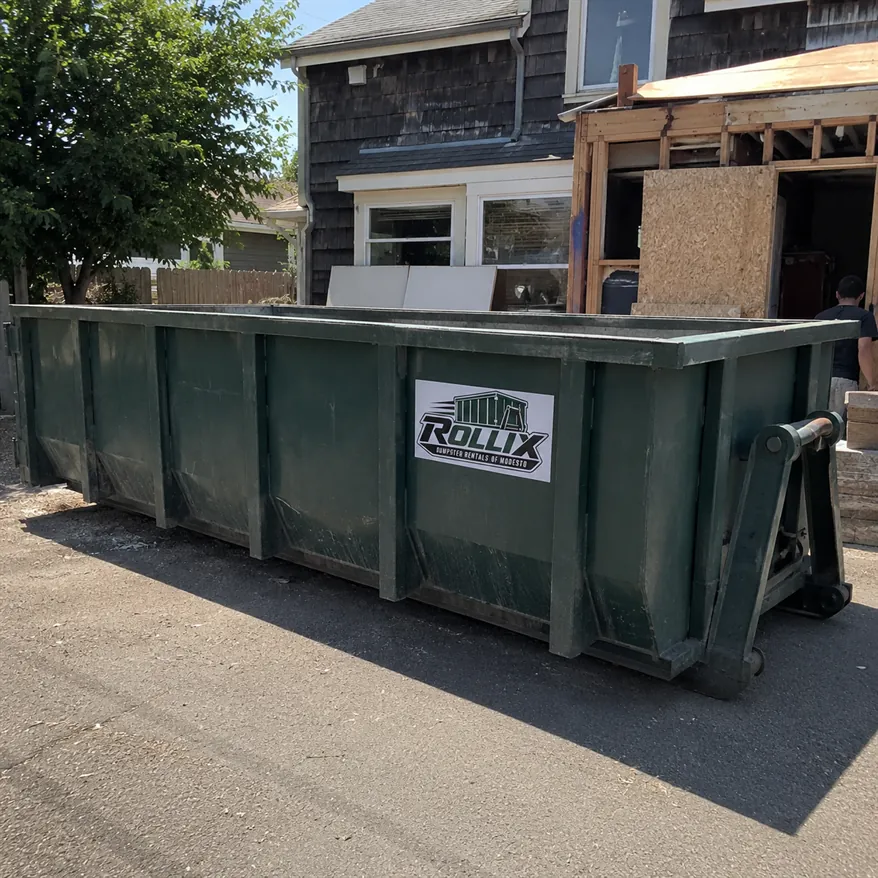
A roll-off container handles all of it in one place, but heavy materials like concrete and dirt fill a container fast. Describe your waste mix when you call us so we can recommend a container that suits the weight and volume you expect. We never guess at what you are throwing away.
- Wood: framing offcuts, plywood, OSB, pallets, trim
- Drywall: gypsum board scraps, plaster, joint compound
- Packaging: cardboard, shrink wrap, plastic banding
- Roofing: asphalt shingle tear-off, underlayment, flashing
- Siding: fiber cement, vinyl, wood siding cutoffs
- Flooring: tile, hardwood, underlayment, carpet scraps
- Metal: stud offcuts, ductwork, strapping, nails
Jobsite housekeeping with a roll-off container
A tidy jobsite is a faster jobsite. When debris has a designated container, crews spend less time tripping over piles and more time on the build. Daily housekeeping also reduces dust, keeps fire hazards down, and leaves a professional impression on clients and inspectors.
Place the dumpster within a short carry from the main work area. Encourage crews to toss cutoffs as they go rather than letting piles build up. For multi-story projects, consider a chute or a staging area near the container to keep the path clear. Small habits like flattening cardboard boxes and breaking down large scraps keep the container usable longer.
Keeping the site walkable
Trip hazards from lumber, drywall, and packaging slow every trade that follows. A quick end-of-day sweep into the dumpster takes minutes and pays off in safety and speed. If your site is tight, we can talk through placement options that keep the container accessible without blocking material deliveries or equipment access.
Separating materials on a Modesto build
Clean wood, cardboard, and scrap metal are straightforward to separate and often have lower disposal costs than mixed debris. Setting aside a small area for these materials can reduce the weight of your general load and may open up recycling options. Confirm current acceptance rules with us by phone, since what a facility takes can change.
Some materials need their own disposal path regardless. Paints, solvents, adhesives, and aerosol cans usually cannot go into a general construction dumpster. Asbestos, lead-painted materials, and fluorescent bulbs have specific handling rules. When in doubt, describe the material to our team and we will point you in the right direction.
How a roll-off rental works for a construction project
You call us at (209) 224-9332 and describe your project: the type of build, the phase you are in, and the debris you expect. We help you choose a container and schedule delivery to your Modesto jobsite. You fill it as the work progresses, keeping the site clean and organized.
When the container is full or your project wraps up, you call us for pickup. We haul the debris away and handle disposal. If your project runs long or produces more waste than expected, we can arrange a swap: a fresh empty container dropped off as we haul the full one away. Every detail, from placement to final pickup, is confirmed on the phone so nothing is left to chance.
Public street placement in Modesto
If your jobsite cannot fit a container on private property, a street placement may be the answer. The City of Modesto may require a permit for a dumpster on a public right-of-way. Check with the city for current rules and fees, and let our team know your placement plan when you schedule delivery.
Construction debris and weight considerations
Heavy debris like concrete, brick, and dirt fills a container by weight long before it looks full. Lighter debris like wood, drywall, and packaging fills by volume. Mixing the two in one container can lead to overage charges because disposal facilities charge by weight. Tell us your debris mix honestly so we can suggest a container that keeps your costs predictable.
For more detail on how debris types affect disposal, see our construction debris and waste management guide. If your project involves a commercial build or major renovation, our construction dumpster rental page covers service patterns for contractors.