What comes off a roof during replacement
A full tear-off strips everything down to the wood decking. The main layer is asphalt shingles, which are heavy and granular. Beneath them sits the underlayment, usually felt paper or a synthetic sheet, which comes up in long strips.
Metal flashing around chimneys, valleys, and eaves gets pried loose and tossed. The crew also pulls thousands of roofing nails, which scatter across the ground. If the decking has rot or water damage, those plywood or OSB sections get cut out and added to the pile.
Why shingle weight matters
Architectural shingles weigh more than three-tab shingles, and a house with two layers of old roofing doubles the debris weight. Overloading a container creates safety problems and may prevent us from hauling it. Your roofer can estimate the total tonnage so we can help you choose a container that matches the job.
How tear-off day works
The crew arrives early and begins stripping the old roof, usually working from the peak downward. Debris gets thrown or slid directly into the dumpster, or onto a tarp that gets emptied into the container in batches. The goal is to keep the ground clear so no one trips on loose shingles.
Throughout the day, someone on the crew runs a magnetic sweeper over the driveway, walkways, and lawn. Nails hide in grass and gravel, and a bare foot or car tire finds them later if the sweep is skipped. After the last load goes into the dumpster, the crew does a final sweep before packing up.
Protecting your property
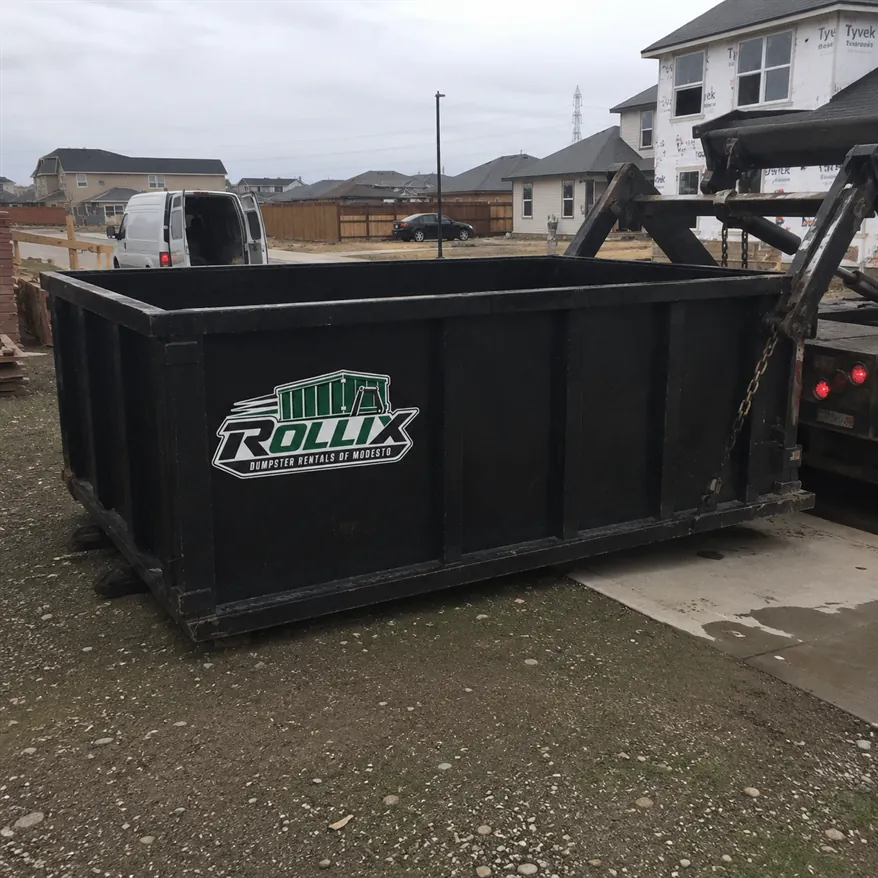
A roll-off container loaded with roofing debris puts concentrated weight on the surface beneath it. Asphalt driveways can soften in Modesto summer heat and develop depressions. Concrete can crack if the load exceeds what the slab was designed to bear.
Placing sheets of plywood under the container rails spreads the weight. Our team can advise on placement when you call, and your roofer may have additional suggestions based on your specific driveway and yard layout.
- Lay plywood under the container footprint and along the delivery path
- Keep the container on a paved surface when possible, away from sprinkler heads and utility lines
- Ask your roofer to run the magnetic sweeper multiple times during the day
- Check with the City of Modesto if the container must sit on the street; a permit may be required
Choosing the right dumpster for roofing
Roofing debris is one of the heaviest waste streams in residential construction. A container sized for a kitchen remodel may not handle the weight of shingles from even a small roof. We help Modesto homeowners match the container to the estimated debris weight and volume.
Our Dumpster Rental Solutions page walks through how different project types connect to container choices. For roofing specifically, the Roofing Dumpster Rental page covers what to expect, and the Dumpster Rental Considerations for Roofing Projects page offers a deeper look at weight and placement. If you are unsure which size fits your roof, call us at (209) 224-9332 and we will talk through the numbers with you.