Key takeaways
- A dumpster on private property rarely needs a city permit, but a container in the public right of way usually does.
- HOA covenants and lease agreements can override general rules, so check your own documents first.
- The City of Modesto sets the current permit process; always confirm the latest requirements directly with them.
- Protecting the surface with plywood and planning for the delivery truck's clearance prevents property damage.
Private Property or Public Street: The Basic Distinction
Where you put the dumpster is the first decision. The answer determines almost everything else, including permits, surface protection, and how long the container can stay.
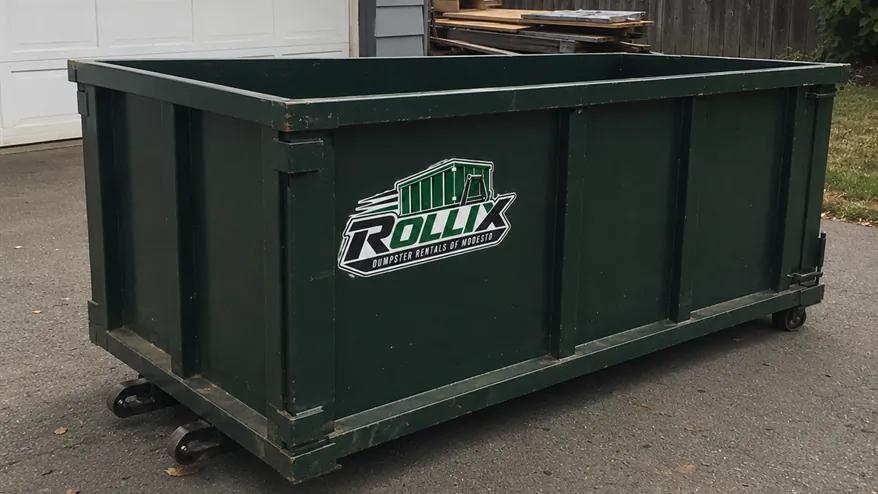
Private property means your driveway, yard, or any land you own. In most cases, placing a dumpster entirely on your own land does not require a permit from the city. You still need enough space for the delivery truck to roll the container off safely and for you to use it without blocking your own access.
The public right of way is different. This is the street in front of your house, the sidewalk, and sometimes the strip of grass between the sidewalk and the curb. When a dumpster sits in the street or blocks a sidewalk, it occupies space that belongs to the public. That is why the City of Modesto, like most cities, requires approval before you place a container there.
When a Permit Is Likely Required
A permit is typically needed any time the dumpster extends beyond your property line. If the only available flat spot is the street, plan on getting permission from the city first.
We cannot state the exact fee, the application form, or how many days the permit covers because those details change. The City of Modesto sets and updates its own rules. Before your rental period begins, contact the city directly to learn the current process, cost, and timeline. Doing this early prevents delays on delivery day.
Some homeowners assume a permit is not needed for a short project. That is a risk. Even a dumpster placed on the street for two days may require a permit. The deciding factor is location, not duration.
Who Gets the Permit
In many cases, the property owner or the person renting the dumpster is responsible for obtaining the permit. Some haulers can handle the paperwork for you, but you should never assume that is included. When you call us, we can talk through the current practice and help you understand what steps you need to take.
HOA Rules and Lease Agreements
A city permit is not the only layer of permission. If you live in a neighborhood with a homeowners association, the HOA likely has its own rules about temporary containers. Some HOAs limit how many days a dumpster can be visible. Others restrict placement to the backyard or require advance notice.
Renters face a similar situation. Your lease may prohibit placing a large container on the property without the landlord's written consent. Even if the city and the HOA allow it, violating your lease can create a problem. Read your governing documents before you book.
These private rules are separate from city code. A permit from the City of Modesto does not override an HOA restriction, and HOA approval does not replace a city permit.
Clearance and Access for the Delivery Truck
The truck that delivers a roll-off dumpster needs room to maneuver. The driver rolls the container off the back of a tilt-bed truck, so the approach must be straight and flat.
Measure the width of the intended spot. The truck and the dumpster are both wider than a standard car. Overhead clearance matters too. Look for tree branches, power lines, and roof eaves that hang lower than about 14 feet. The driver needs a clear path from the street to the final position.
On delivery day, move vehicles, trash bins, and any other obstacles out of the way. If the spot is on the street, park your own cars elsewhere so the driver has room to work.
Slope, Stability, and Safe Placement
A roll-off dumpster needs to sit on level ground. A noticeable slope can make the container unstable when it is loaded, and it can also make the delivery or pickup unsafe.
If the only available spot has a slight grade, tell us when you call. We can help you assess whether the location will work. Never try to level a dumpster with makeshift blocks or ramps unless a professional has approved the setup. An unstable container can shift, causing injury or property damage.
Protecting the Surface Under the Dumpster
A loaded roll-off container is heavy, and its weight concentrates where the metal rails touch the ground. On a concrete driveway, the pressure can leave marks or scratches. On asphalt, it can create depressions, especially in warm weather when the asphalt is softer.
The most common protection is a layer of plywood under the dumpster's footprint. Place thick sheets of plywood where the rails will rest before the container arrives. This spreads the weight and keeps the metal off the pavement. For a lawn or dirt area, plywood also helps prevent the container from sinking after rain.
Plan to protect the surface even if the dumpster will sit for only a few days. The combination of weight and time is what causes damage. A shaded spot can help keep asphalt cooler, but planning ahead makes the difference. Once the container is full and heavy, you cannot lift it to slide protection underneath.
Neighbor Considerations and Public Safety
A dumpster in a driveway or on the street is visible. Giving your immediate neighbors a heads-up is not a legal requirement, but it is a practical one. A quick conversation can prevent complaints to the city or the HOA.
If the container is on the street, make sure it does not block a fire hydrant, a crosswalk, or a neighbor's driveway. Reflective markers or cones around the dumpster improve visibility at night. These small steps keep the site safe for pedestrians, cyclists, and drivers.
For any questions about what the City of Modesto requires for street placement, including required reflectors or barricades, check the current municipal code or call the appropriate city office.
Talking Through Your Project in Modesto
Every property is different. A driveway on one side of town may have ample room, while a street placement a few blocks away may involve a different set of rules. We work with homeowners and contractors throughout Modesto and can help you think through the practical side of placement.
If you are unsure where the dumpster should go, call us at (209) 224-9332. We can discuss your site, the type of debris you are handling, and what to expect with delivery. For the most current permit requirements, you will still need to contact the City of Modesto directly, but we can help you prepare for that conversation.
Taking the time to get placement right means a smoother project from delivery to final pickup.